Need a Design Superhero?
Connect with our Expert Interior Designers! hello.你好もしもし.hola.
GURGAON
Find Us
C2- 23A 3RD FLOOR, Block C2,
Sushant Lok Phase I, Sector 43,
Gurugram, Haryana 122002

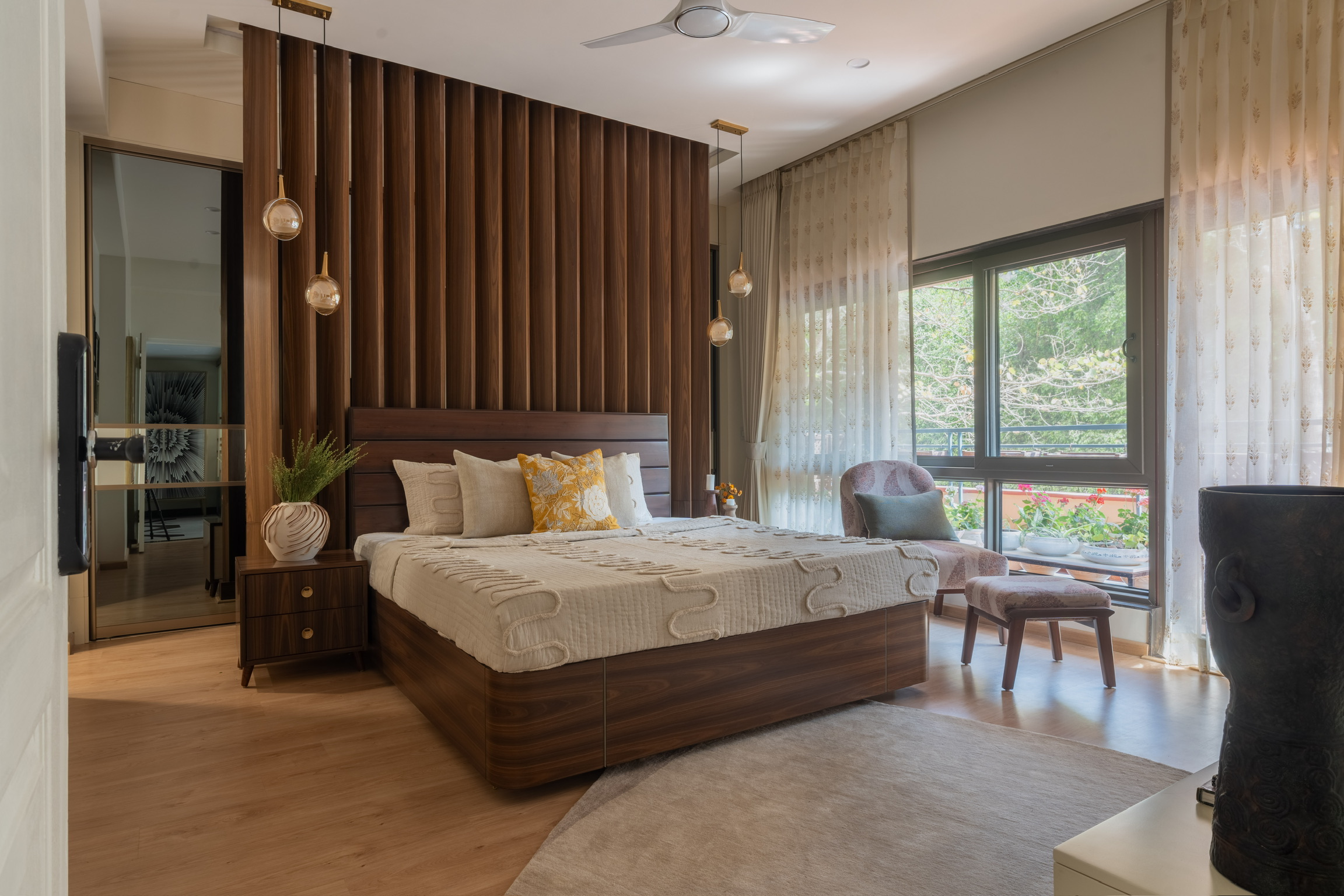
A Lakkadworks project in Gurgaon — fluted walnut joinery, layered warm lighting, and quiet luxury throughout.
Every year at Lakkadworks, we sit across from homeowners who ask us the same thing: "What's actually changing in Gurgaon interiors right now?" Not what global design magazines say. Not what a Mumbai studio is doing. What is happening here — in DLF Phase 3, in Golf Course Extension, in the new towers rising along Sohna Road.
The answer is more interesting than you'd expect. Interior Designer in Gurgaon in 2026 is not chasing trends. It is setting them — quietly, deliberately, and with a level of material intelligence that would have been rare even in this city five years ago.
After delivering 260+ projects across Delhi-NCR, we have a front-row seat to how the city's most discerning homeowners are thinking about their spaces. This is not a list of colours that will be popular on Instagram. This is a ground-level report on what is actually being built, specified, and lived in — right now — inside Gurgaon's premium residential market.
At a Glance — The defining direction of luxury interior design in Gurgaon in 2026 is Quiet Refinement — spaces that feel expensive because every decision has been considered, not because every surface has been decorated. Paired with invisible technology, global-Indian material fusion, and biophilic integration, this is the most cohesive design shift the city has seen in a decade.
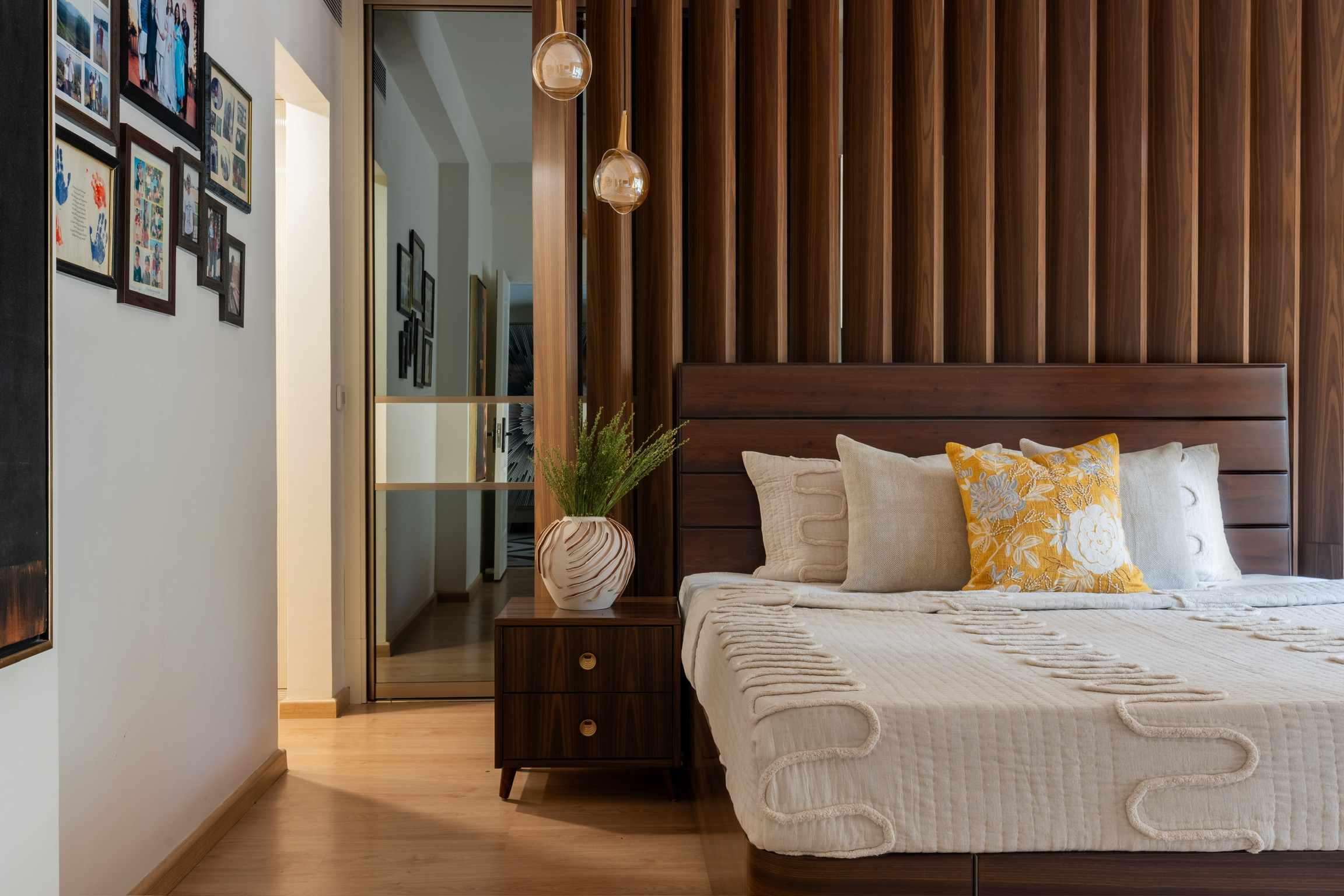
For most of the last decade, Gurgaon's luxury interior market was defined by one word: more. More marble. More gold accents. More feature walls. More statement furniture. The brief was always some version of "make it look impressive."
That brief has changed fundamentally. The homeowners we are working with today are globally travelled, professionally accomplished, and frankly tired of interiors that perform luxury rather than deliver it. They have stayed in design hotels in Tokyo, rented apartments in Copenhagen, and visited clients' homes in Singapore. They know what a thoughtfully considered space feels like — and they want that for themselves.
Three forces are driving this shift:
The result is a design landscape where restraint is the new ambition, and where the quality of a single detail speaks louder than a room full of expensive things.
These are not borrowed from international trend reports. These are the patterns we see emerging across our own project pipeline — the decisions Gurgaon's most discerning homeowners are actually making.
If there is one phrase that captures the direction of Gurgaon's premium interior market in 2026, it is Quiet Luxury. This is the opposite of the maximalist decade that preceded it — and it is not simply about using fewer things.
Quiet Luxury is about precision. It is about a wardrobe door that aligns perfectly at every corner. A kitchen shutter whose grain pattern continues seamlessly across six panels. A ceiling detail that you notice only after you have lived in the room for a week. It is the feeling of a space that has been composed rather than decorated.
What this looks like in practice:
The Lakkadworks Perspective — Quiet Luxury is one of the most technically demanding aesthetics to execute well. The difference between a room that looks understated and one that looks unfinished is entirely in the quality of the joinery, the precision of the fit, and the calibration of the lighting. This is where bespoke craftsmanship earns its premium — and where off-the-shelf assembly falls apart.
Gurgaon went through a phase of brutal minimalism — all-white walls, grey concrete floors, and furniture that looked better in a photograph than it felt to live in. That phase is over.
What has replaced it is Warm Minimalism: the same commitment to clean lines and uncluttered space, but with materials and tones that feel genuinely inhabitable. Think linen textures, walnut tones, terracotta accents, and the warmth of natural light bouncing off a lime-plastered wall.
| Out in 2026 | In in 2026 |
|---|---|
| Cool grey + white | Warm ivory + warm white |
| High-gloss acrylic | Natural veneer, matte laminates |
| Polished chrome hardware | Brushed brass, aged bronze |
| Stark concrete flooring | Engineered oak, travertine, Kota stone |
| Bare pendant bulbs | Warm 2700K diffused lighting |
The result is spaces that feel calm without feeling clinical — which is precisely what a Gurgaon homeowner needs after a 12-hour day in a corporate tower.
The smart home revolution in Gurgaon has entered its second, more sophisticated phase. The first phase was about adding technology — touchscreen panels on every wall, LED colour-changing strips along every edge. The 2026 version is about subtracting all of that. The technology is still there — it has simply become invisible.
What 2026 smart home integration actually looks like:
Lakkadworks Note — We work with home automation specialists to ensure that technology integration happens before the joinery is designed — not after. Retrofitting smart systems into completed interiors is expensive and always visible. The right sequence is: automation brief first, design second, execution third.
One of the most exciting developments in Gurgaon's luxury interior market is a genuine reconnection with Indian craft — not as nostalgia, but as a conscious choice by homeowners who have seen the best of global design and come back to their own heritage with fresh eyes.
This is not about adding a Rajasthani chest in a corner or hanging a madhubani print in the guest bedroom. The 2026 version is far more integrated and far more sophisticated:
The result is a home that tells a genuine story — one that no catalogue-sourced interior ever can. It is also, practically speaking, one of the best ways to achieve a truly unique home in a city where every luxury tower uses the same shortlist of suppliers.
Biophilic design has been a trend phrase for several years. In Gurgaon in 2026, it has become something more concrete: a genuine infrastructure decision made at the design brief stage, not added as an afterthought. Living in one of India's most urban, most air-polluted environments, Gurgaon's homeowners are building nature into their homes because it measurably improves how they feel inside those homes.
| Biophilic Element | Practical Application in Gurgaon Homes |
|---|---|
| Living plant wall | Automated, built into balcony or dining zone |
| Natural stone surfaces | Travertine, Kota stone, raw marble over tiles |
| Organic textures | Rattan, cane, unprocessed wood as structural material |
| Daylight maximisation | Lighter floors, strategic glazing, decluttered sills |
| Indoor water feature | Recessed feature in foyer or courtyard — rare, high-impact |
The decade of sharp edges and boxy furniture is drawing to a close. Across Gurgaon's most recently completed projects — including several of our own — curves have returned as a primary formal language. This is not a throwback to the rounded excesses of the 1970s. The 2026 version is deliberate and restrained: a single curved sofa in an otherwise linear living room, an arched kitchen island, a bedroom wardrobe with softly radiused corners.
Where curves are appearing most:
Note — Curved joinery is significantly more demanding to execute than straight-line work. It requires experienced craftsmen, careful planning, and the right workshop capability — which is why it is appearing predominantly in the premium and ultra-luxury segment.
One of the most distinctive techniques appearing in Gurgaon's top-end projects is Material Drenching: the practice of using a single material across multiple surfaces of a room to create a sense of depth and cohesion. Think of a master bedroom where the same fluted walnut veneer appears on the wardrobe, the bed headboard, the floating TV panel, and the ceiling reveal. The material becomes the architecture.
Why it works in Gurgaon homes:
Best materials for drenching in Gurgaon's climate — Natural veneer (stable, warm, ages well), honed stone (not polished — less maintenance), fluted panels (texture that catches light), lime plaster (breathable, forgiving, deeply beautiful).
The final major trend of 2026 is less about aesthetics and more about function: the deliberate design of sleeping and bathing spaces as genuine wellness environments. Gurgaon's professional class is chronically sleep-deprived and chronically overstimulated. The 2026 response is a bedroom with genuinely calibrated acoustic insulation, blackout integration built into the architecture, lighting designed for sleep, and a bathroom that functions as a decompression chamber.
What the wellness bedroom actually involves:
The master bathroom in a 2026 Gurgaon premium home is not a showpiece — it is a system. Radiant heated floor, anti-fog mirrors with integrated lighting, rainfall shower with precise temperature control, and storage designed to conceal everything. The experience is closer to a five-star hotel room than to the bathrooms most Gurgaon homes were built with.
Trend lists are useful. What is more useful is understanding how these directions actually shape the decisions you will make in each room of your home.
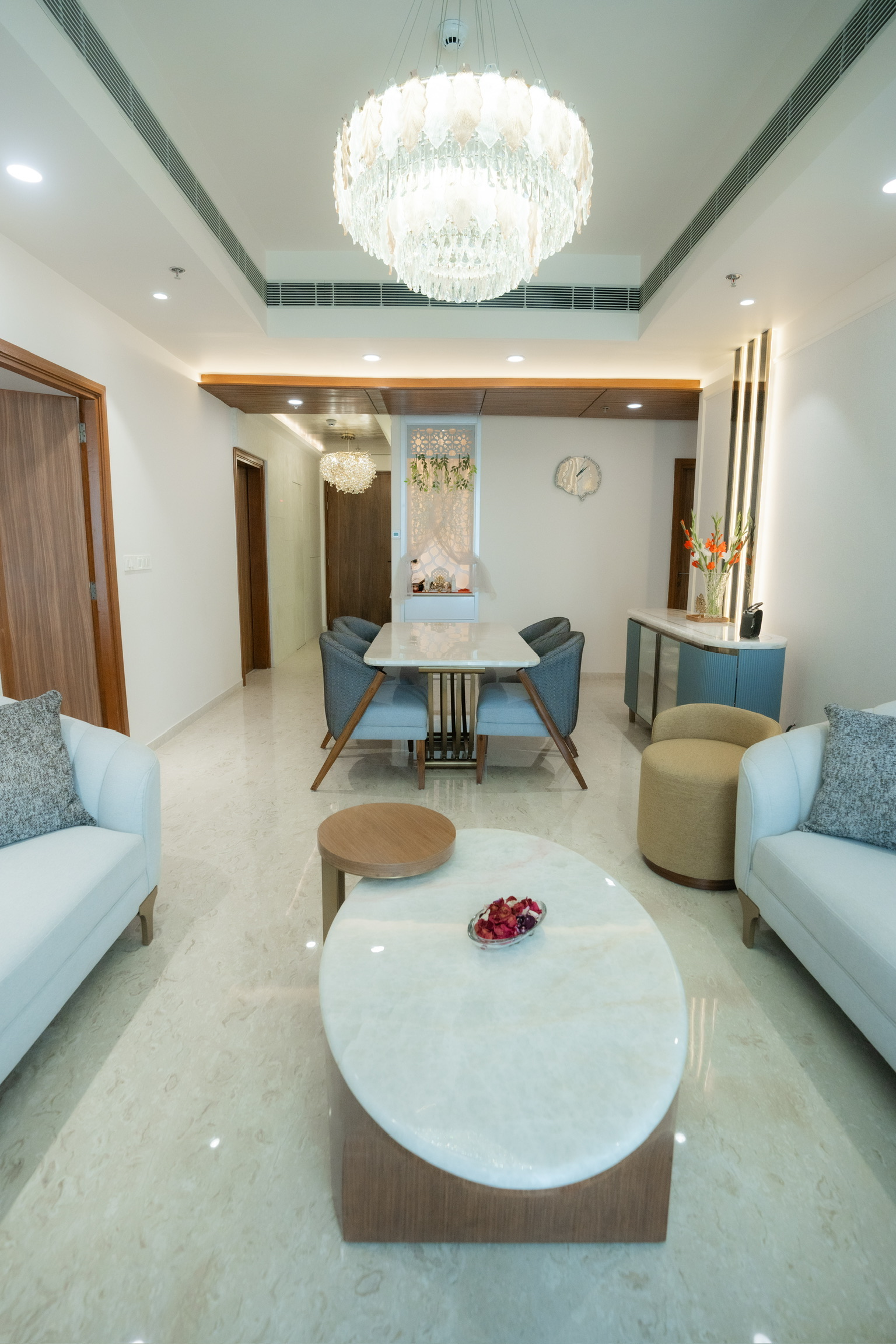
| Room / Area | Key 2026 Directions | What to Specify |
|---|---|---|
| Modular Kitchen | Global-Indian fusion, invisible tech, material drenching | Veneer/matte shutters, Hettich/Häfele hardware, quartz countertop, concealed appliances |
| Master Bedroom | Wellness-first, quiet luxury, material drenching | Fluted wardrobe, acoustic wall, blackout integration, 2700K lighting |
| Living + Dining | Warm minimalism, biophilic, curved forms | Curved sofa, natural stone or engineered oak floor, living planter, layered lighting |
| Master Bathroom | Wellness, quiet luxury, invisible tech | Heated floor, concealed storage, rainfall shower, anti-fog mirror with lighting |
| Home Office | Invisible tech, warm minimalism, biophilic | Acoustic treatment, integrated lighting, concealed cable management, a plant wall |
| Entrance / Foyer | Global-Indian craft, quiet luxury | Statement flooring inlay, handcrafted console, curated lighting — your home's first impression |
As important as knowing what is coming in, is knowing what to avoid spending money on. These are the design choices we are now actively steering clients away from.
Knowing what a trend is and being able to build it are two very different things. Executing 2026 luxury trends well requires a specific kind of studio — one with in-house manufacturing, experienced project management, and real material expertise.
Every joinery piece is built to the exact geometry of your space — not pulled from a catalogue and trimmed to fit. Curved wardrobe doors, fluted panels with continuous grain, material-drenched rooms — these are only possible with controlled manufacturing.
Invisible technology integration works only when the automation design brief precedes the interior design. Our coordination with automation partners ensures smart systems are buried in the architecture, not bolted onto it.
We have established relationships with artisan communities in Rajasthan, Uttar Pradesh, and Delhi for handcrafted brass hardware, bespoke textiles, and one-of-a-kind art commissions. These are not catalogue items.
Senior Lakkadworks designers visit every active site at critical milestones. The precision that quiet luxury requires is impossible to achieve through remote coordination.
Every project is documented with a structured budget framework from day one. Trend adoption should not mean budget surprise. We will tell you what each specification choice costs — and what a considered alternative might be.
Talk to a studio that has delivered 260+ projects across Delhi-NCR. Free site visit. No obligations.
Consultation
Book a free design consultation with Lakkadworks and bring bespoke, luxury interiors to your home.
Chat on WhatsApp →