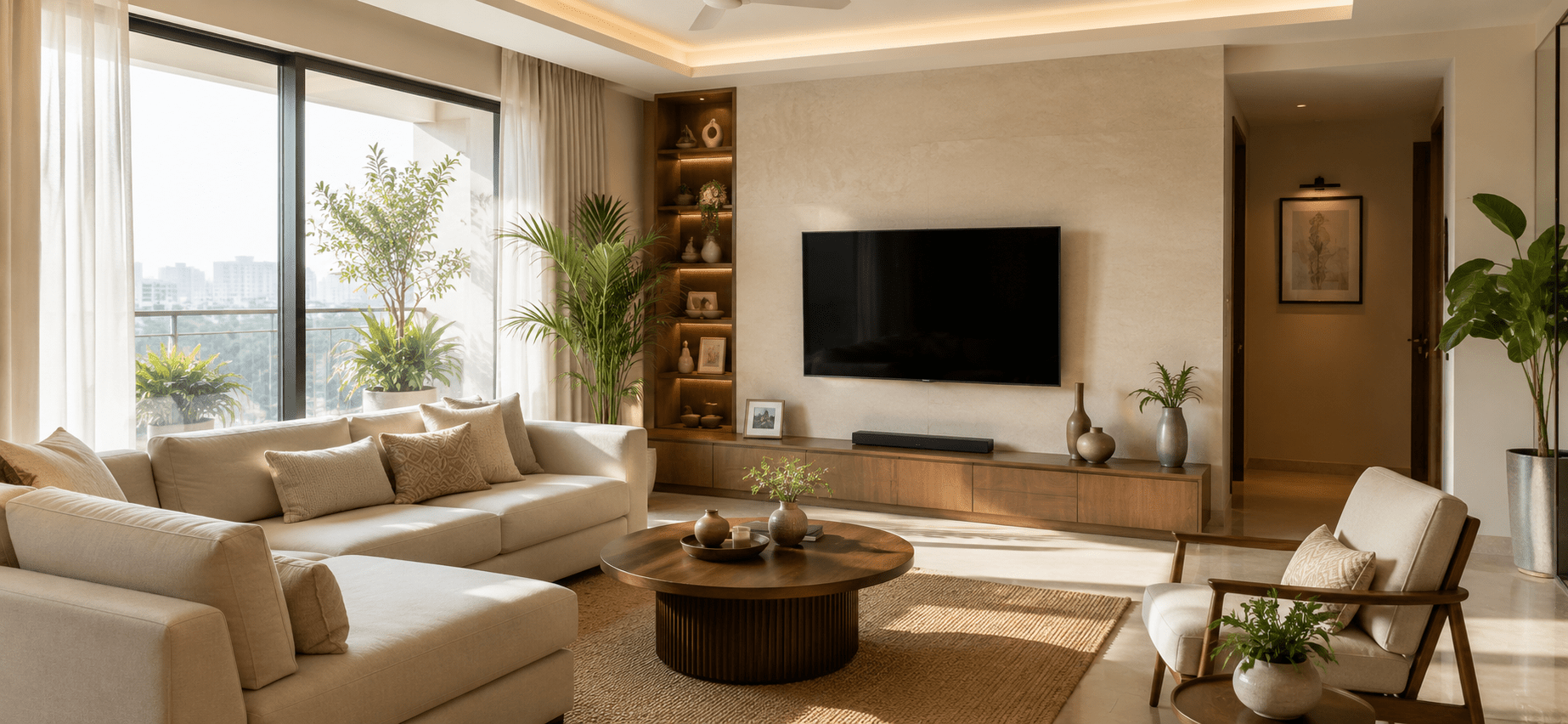
Interior Designing 101: A Complete Beginner's Guide to Home Interiors
Written by Lakkadworks Team
If you've just started Googling "interior designing," you've probably noticed two things: everyone has an opinion, and almost no one tells you where to actually begin. This guide fixes that.
Whether you're moving into a Gurgaon apartment, a Delhi NCR home, or a Noida high-rise, the decisions you need to make are the same — and this guide walks you through them in order. No mood-board overload, no jargon.
What Interior Designing Actually Involves
Home interior design isn't just picking paint colours and furniture. It's the planning layer that decides how your home functions before it decides how it looks — where the electrical points go, how much storage you'll actually need, which wall can take a wardrobe and which can't because of a beam behind it.
Interior decoration is the layer on top: soft furnishings, art, accessories. You can decorate a badly designed home and it'll still feel wrong. Get the design right, and decoration becomes easy.
The single biggest reason first-time homeowners in Delhi NCR and Gurgaon are unhappy with the result: they hire someone for the decoration stage while skipping the design stage entirely.
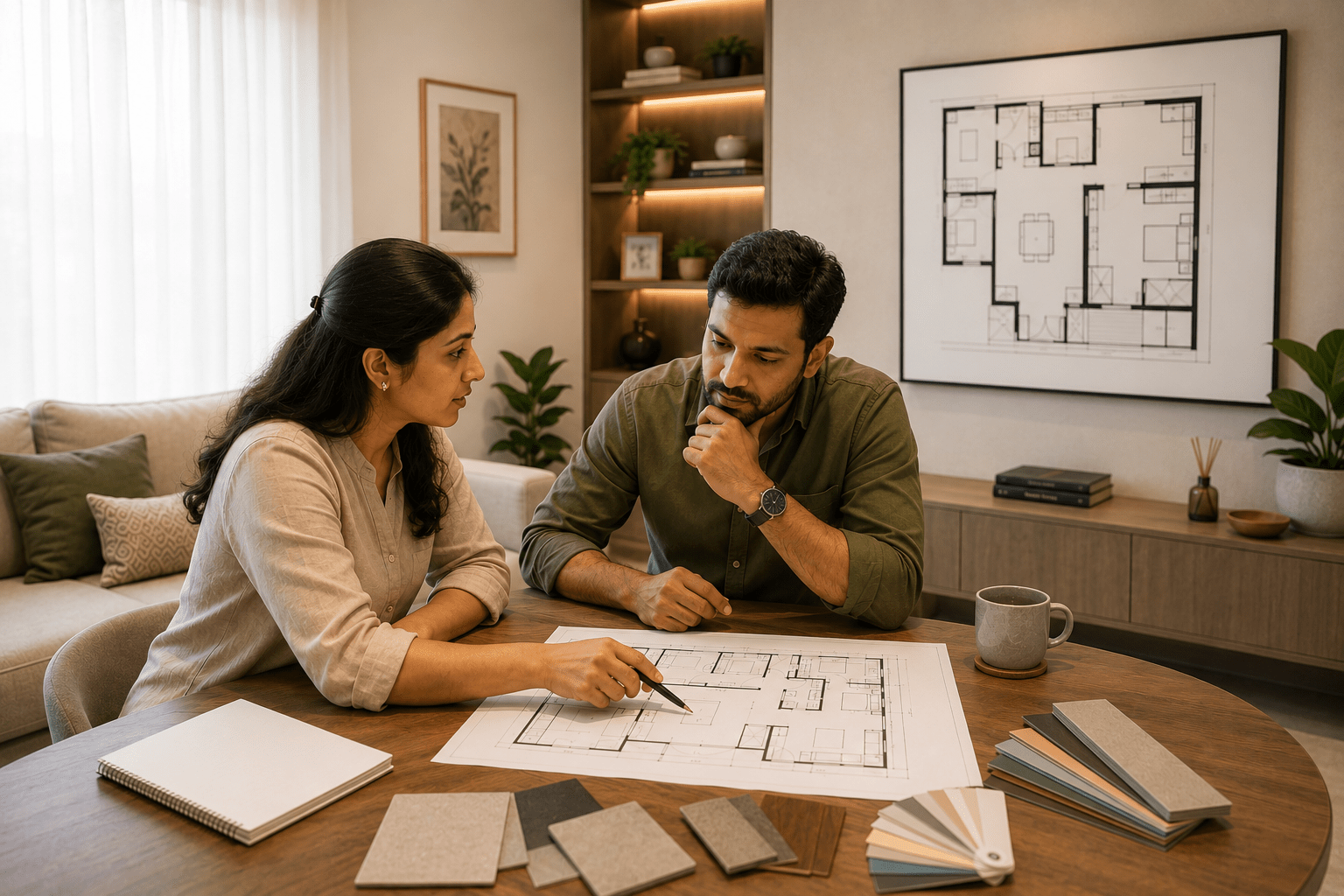
Step 1: Understand Your Space Before You Look at a Single Photo
Before opening Pinterest, walk through your home with these questions — whether you're in a 2BHK in Noida, a 3BHK in Gurgaon, or a villa in Sushant Lok:
How does your family actually use each room? Not how you imagine using it — how you actually do. If the dining table currently holds laundry, your "dining room" is storage space pretending to be a dining room.
Where does natural light fall, and when? West-facing rooms in Gurgaon high-rises get harsh afternoon heat — avoid dark upholstery there, it absorbs heat and fades faster. North-facing apartments need brighter finishes and strategic artificial lighting.
What's non-negotiable storage? Indian homes typically underestimate storage need by 30–40%. Walk through your current wardrobes and storage and count what doesn't fit, not what does.
This audit takes an hour and saves weeks of redesign later in your residential interior project.
Step 2: Set a Budget You'll Actually Stick To
Most budget overruns in home interior projects happen because people budget for furniture and forget civil work. A realistic split for a full residential interior in Delhi NCR looks roughly like this:
If a quote you've received doesn't separate civil work from furniture cost, ask for that breakdown before signing anything — it's the easiest way to spot where the real cost is hiding.
Step 3: Choose a Style That Matches How You Actually Live
Skip the style quiz. Ask instead:
Do you cook daily, heavily, and with lots of spices? Open modular kitchen layouts look great in photos but in most Delhi NCR households, oil splatter and lingering smells make a semi-open or closed kitchen far more livable.
Do you have kids or pets? Low-maintenance, stain-resistant materials matter more than trend.
How much do you actually clean? Matte finishes hide dust less than they hide fingerprints; glossy finishes show both. High-gloss modular interiors look stunning until you're wiping them down twice a day.
A "minimalist" home interior project that doesn't account for how much stuff you actually own will look minimalist for exactly two weeks.
Step 4: Get the Materials Right
This is the part influencer content skips entirely, and it's where quality actually lives in any residential interior project.
Plywood Grade
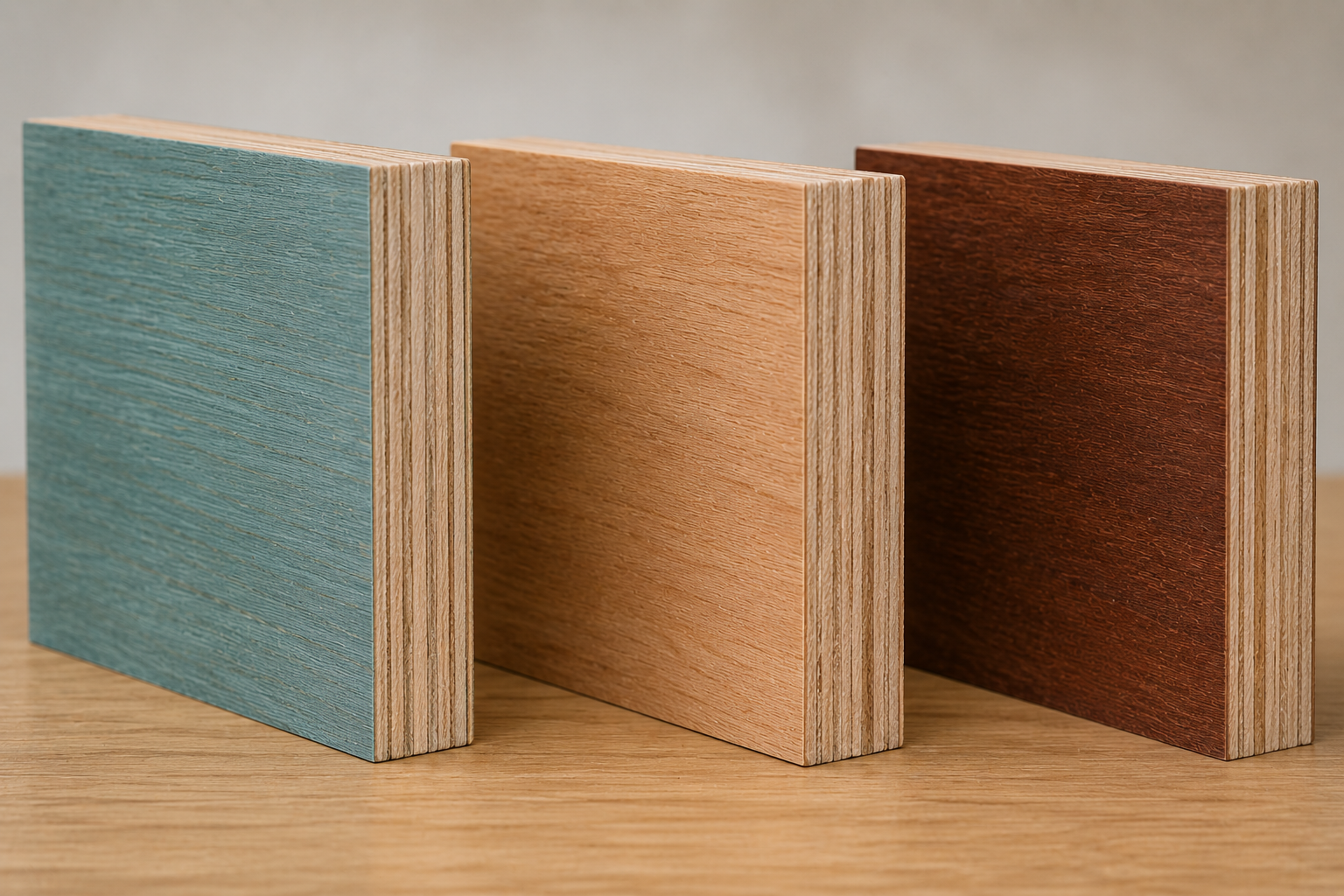
Plywood grade matters more than brand — and grade is governed by the BIS IS 303 standard. For bedroom wardrobes in normal Delhi NCR conditions, MR grade is usually enough. For kitchens and humid zones, step up to BWR grade. Reserve BWP/marine grade (IS 710) for areas with constant water exposure — it's 30–50% pricier and overkill for a standard wardrobe. Exception: homes near Gurgaon's golf courses or Noida's water bodies where humidity runs higher.
Laminate vs. Veneer
Laminate is more durable and budget-friendly; veneer looks richer but scratches and stains more easily. Choose based on how careful your household actually is, not how it looks in the showroom sample.
Hardware
Hinges, channels, and soft-close mechanisms are the single most under-budgeted item in any modular interior project, and they're the first thing that fails. Spend here before you spend on finishes.
Lighting in Three Layers
Ambient — general room light
Task — under-cabinet lighting, study lamp
Accent — highlighting a wall or alcove
A single ceiling light is the most common reason finished residential interiors still feel flat — in photos and in person.
DIY / piecemeal (separate carpenter, painter, electrician) — Cheapest on paper, but you become the project manager. Works only if you have time to be on-site regularly.
Independent interior designer — You get design expertise and vendor management, but execution is usually outsourced to separate contractors, so timelines can stretch in busy Delhi NCR construction seasons.
Turnkey home interiors — Single point of accountability: design and execution under one contract, one timeline, one warranty. Costs more upfront but removes the coordination burden. The preferred model for most Gurgaon and Noida apartment owners who are working full-time.
There's no universally "best" option — it depends on how much time you have versus how much you're willing to pay for someone else to manage that time. Many professionals at reputable interior design companies in Delhi NCR are affiliated with the Institute of Indian Interior Designers (IIID) — worth asking about when you're vetting candidates.
A Realistic Process, Start to Finish
Site measurement and requirement discussion
Week 1 — The foundational walkthrough before any design decision is made.
Weeks 2–5 — Photorealistic renders and full material specification before any work begins.
Civil work and electrical
Weeks 5–9 — The messy stage: walls, false ceiling, electrical conduits. Don't judge the home here.
Modular furniture fabrication and installation
Weeks 5–11 — Runs parallel to civil work; factory-made units installed once civil is clear.
Final fit-out
Week 12 — Lighting, curtains, décor. The home comes together in this final week.
A full 2–3BHK home interior project in Gurgaon, Noida, or Delhi realistically takes 10–14 weeks from sign-off to handover. Anyone promising a full home in three weeks is either cutting corners or hasn't accounted for fabrication lead times.
Mistakes to Avoid
Finalising furniture before electrical layout — you'll end up with switches behind sofas. Especially common in ready-to-move Noida apartments where wiring is already in place.
Ignoring ventilation for the sake of a "clean" look — Delhi NCR kitchens especially need real exhaust planning, not just an aesthetic chimney.
Skipping the contingency budget because the initial quote felt high enough already.
Choosing trend-led colours for fixed elements (kitchen cabinets, flooring) that are expensive to change later — keep trend-chasing to cushions and curtains instead.
A Quick Checklist Before You Start
Walked through and audited actual storage needs
Set budget with civil work, furniture, and 5–10% contingency separated
Decided kitchen type based on cooking habits (especially important in Indian households)
Confirmed plywood grade (MR / BWR / BWP) for each area based on moisture exposure
Planned lighting in three layers — ambient, task, and accent
Chosen DIY, designer, or turnkey based on available time, not just cost
Frequently Asked Questions
It varies widely by city and finish level — budget, mid-range, and premium tiers can differ by 3–4x for the same layout. In Gurgaon and Noida, per-square-foot rates typically range from ₹1,200 (basic) to ₹3,500+ (luxury). Always get itemised quotes rather than a single lump-sum number.
Smaller Noida and Gurgaon apartments benefit more from professional space planning, not less — every wasted inch is more noticeable in 600 sq ft than in 2,000.
Civil work and electrical changes happen first and look the messiest — don't judge the home interior project until furniture and lighting go in around weeks 8–10.
Modular interior work involves factory-made units — kitchen cabinets, wardrobe carcasses, TV panels — that are manufactured in a workshop and assembled on-site. Civil work involves on-site construction: walls, false ceilings, floor tiling, electrical conduits, plumbing changes. Most full home interior projects in Gurgaon and Noida require both. Modular work is faster and more consistent in finish quality; civil work is what makes the structural changes possible.
It depends on how long you plan to stay and what your landlord permits. For rentals, the smart approach is to focus on non-permanent changes — loose furniture, curtains, rugs, lighting fixtures, and peel-and-stick solutions — rather than built-in carpentry or wall-breaking. Many interior designers in Delhi NCR offer a "rental interior" consultation package specifically for this situation.
BOQ stands for Bill of Quantities — an itemised list of every material, fitting, and labour cost that goes into your project. A good interior design company will provide a BOQ before any work starts, breaking out civil work, plywood, laminates, hardware, electrical fittings, soft furnishings, and design fees separately. If a contractor gives you only a single per-square-foot number without a BOQ, you have no way to verify what's included or compare quotes accurately. Always insist on one.
Ask for completed project photos with the actual client's contact details — not just portfolio images. Ask whether they have a registered office or workshop. Check if they're members of the Institute of Indian Interior Designers (IIID). Ask for a written contract that includes scope of work, timeline, payment schedule, and warranty terms before paying anything. Reliable interior design companies in Gurgaon and Noida will have all of this ready without hesitation.
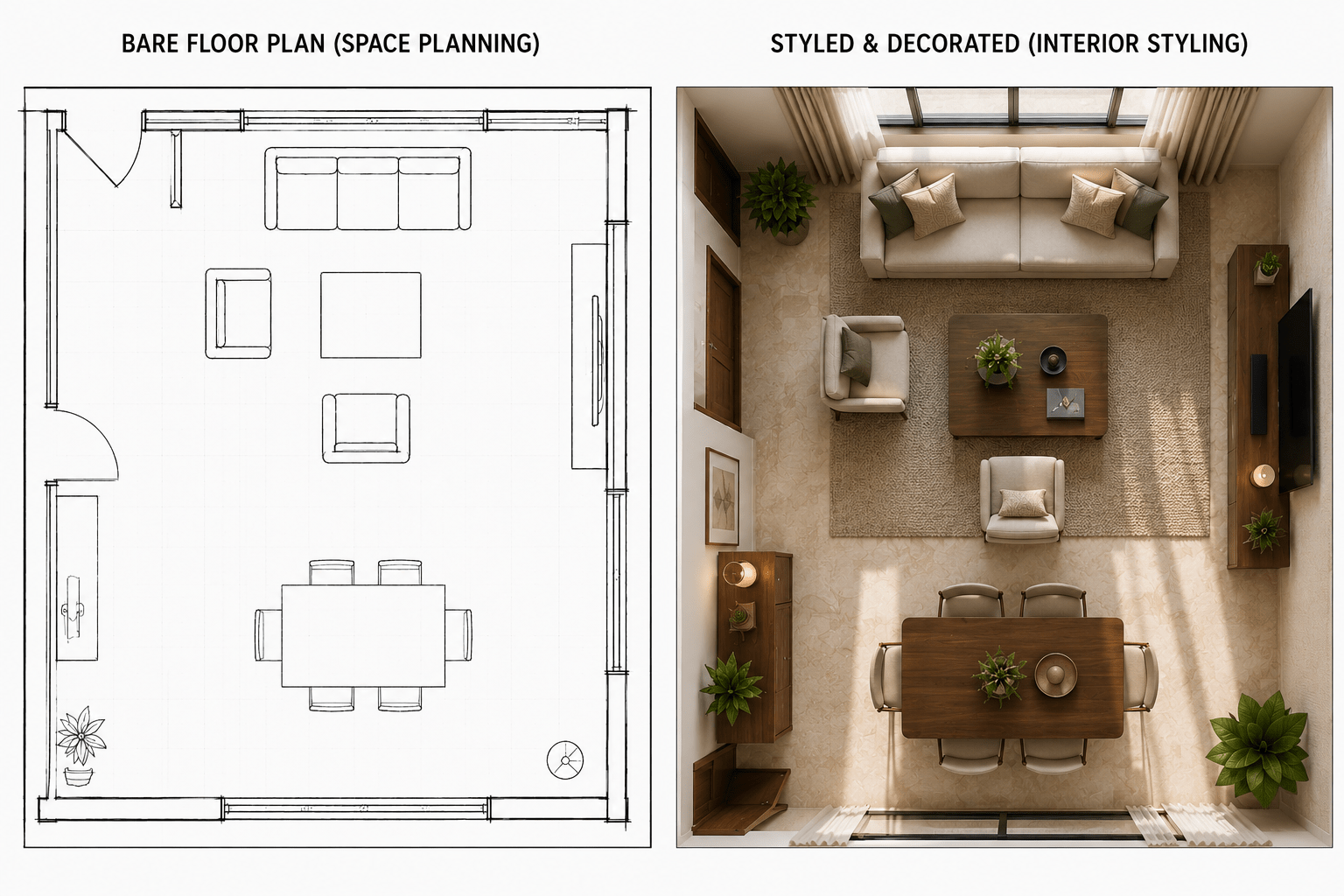
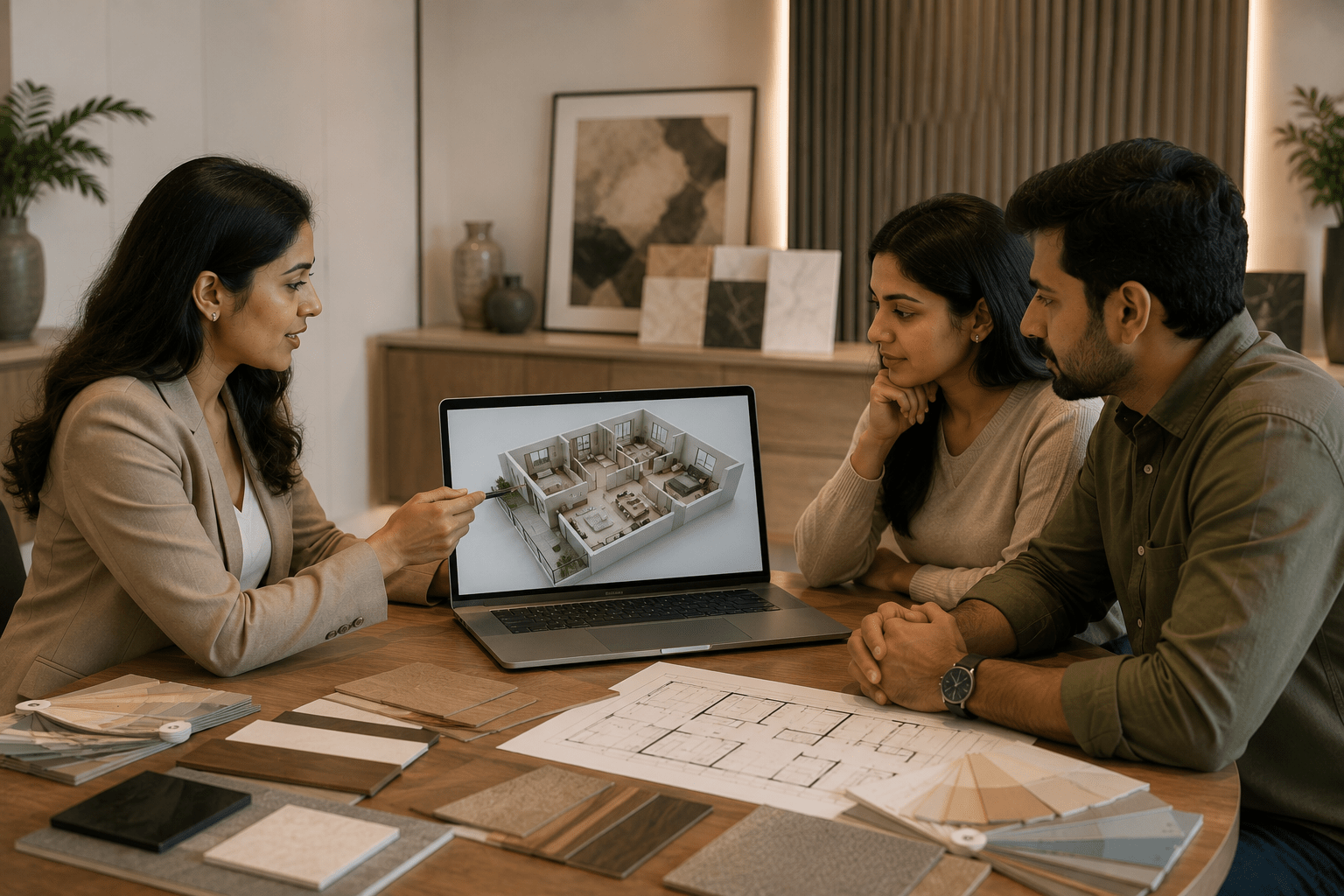
A 2D floor plan is a bird's-eye view showing room dimensions, furniture placement, and traffic flow — the functional layout document used to plan electrical points, storage positions, and room proportion. A 3D design is a photorealistic render showing how the finished space will actually look — colours, materials, lighting, and furniture all visualised together. Reputable interior design companies provide both: the 2D plan for planning decisions, the 3D render for approval before any work begins.
Yes, but it comes with a cost — in time, money, or both. Changes after civil work has begun are expensive to undo. Changes after modular furniture has been manufactured are even more so, since factory-made units are custom-cut to your dimensions. The design approval stage — before any work starts — is when changes are free. Spending 4–6 weeks on detailed design and 3D review upfront is worth it, especially in Gurgaon apartments where every square foot costs money.
A false ceiling is a secondary ceiling installed below the structural slab — typically made of gypsum board — used to conceal wiring, add recessed lighting, improve acoustics, and create a more finished look. In most Delhi NCR apartments, the slab height is 10–10.5 feet, which makes a false ceiling practical since you still have 9–9.5 feet of usable height after installation. It's not mandatory but is one of the highest-impact changes you can make to how a room feels.
False ceiling costs in Gurgaon and Delhi NCR typically range from ₹70–150 per square foot for a basic gypsum board false ceiling, up to ₹200–350 per square foot for designer profiles, coves, or backlit panels. The final cost depends on design complexity, lighting cutouts, and whether POP or gypsum is used. Always get this quoted separately in your BOQ.
In a regular interior design project, the designer creates the design and hands over drawings and specifications — you then manage contractors, carpenters, electricians, and suppliers separately. In a turnkey interior project, a single company handles everything: design, material procurement, civil work, modular fabrication, installation, and final styling, under one contract. The turnkey model costs more but eliminates the coordination burden entirely — you hand over the keys and receive a finished home.
Yes, and it's a common approach in Delhi NCR. The typical sequence is: Phase 1 — civil work, electrical, and false ceiling; Phase 2 — modular kitchen and wardrobes; Phase 3 — loose furniture, lighting, and décor. The risk with phasing is that decisions made in Phase 1 constrain what's possible in later phases — so even if you execute in phases, get the full design done upfront so every phase follows a single, coordinated plan.
Plywood quality depends more on grade and certification than brand. Look for plywood certified under BIS IS 303 (for MR and BWR grades) or BIS IS 710 (for BWP/marine grade). Well-known manufacturers include Century Ply, Greenply, and Kitply, but even within a brand, quality varies between product lines. Ask your interior designer or contractor for the specific product name and IS certification number, not just the brand.
A rough benchmark for a 3BHK in Noida Sector 78 or similar locations: ₹6–9 lakh for a basic functional interior, ₹12–18 lakh for a mid-range finish with modular kitchen and wardrobes, and ₹22 lakh and above for a premium or luxury interior. These are indicative ranges — actual costs depend on the number of rooms being designed, material choices, and whether you're doing a full turnkey project or only specific rooms.
Ask your contractor or designer for a weekly progress update with photos from the site. Key milestones to track: civil work completion, electrical rough-in complete (before walls are plastered), factory dispatch of modular units, installation complete, and final snag list. A reputable interior design company will share a project timeline with these milestones at the start of work. Delays in Delhi NCR are common during monsoon season (July–September) and festive procurement periods (October–November), so factor these into your timeline.
LW
Lakkadworks Team
Interior Design Studio in Gurgaon & Noida · 250+ Projects · Led by Sawan Monga
Start the Right Way
Ready to Begin Your Home Interior Project?
We offer a complimentary first consultation and site visit for homeowners across Gurgaon, Noida, and Delhi NCR. We walk through your space, understand your brief and budget, and give you an honest picture of what's possible — no jargon, no pressure.